
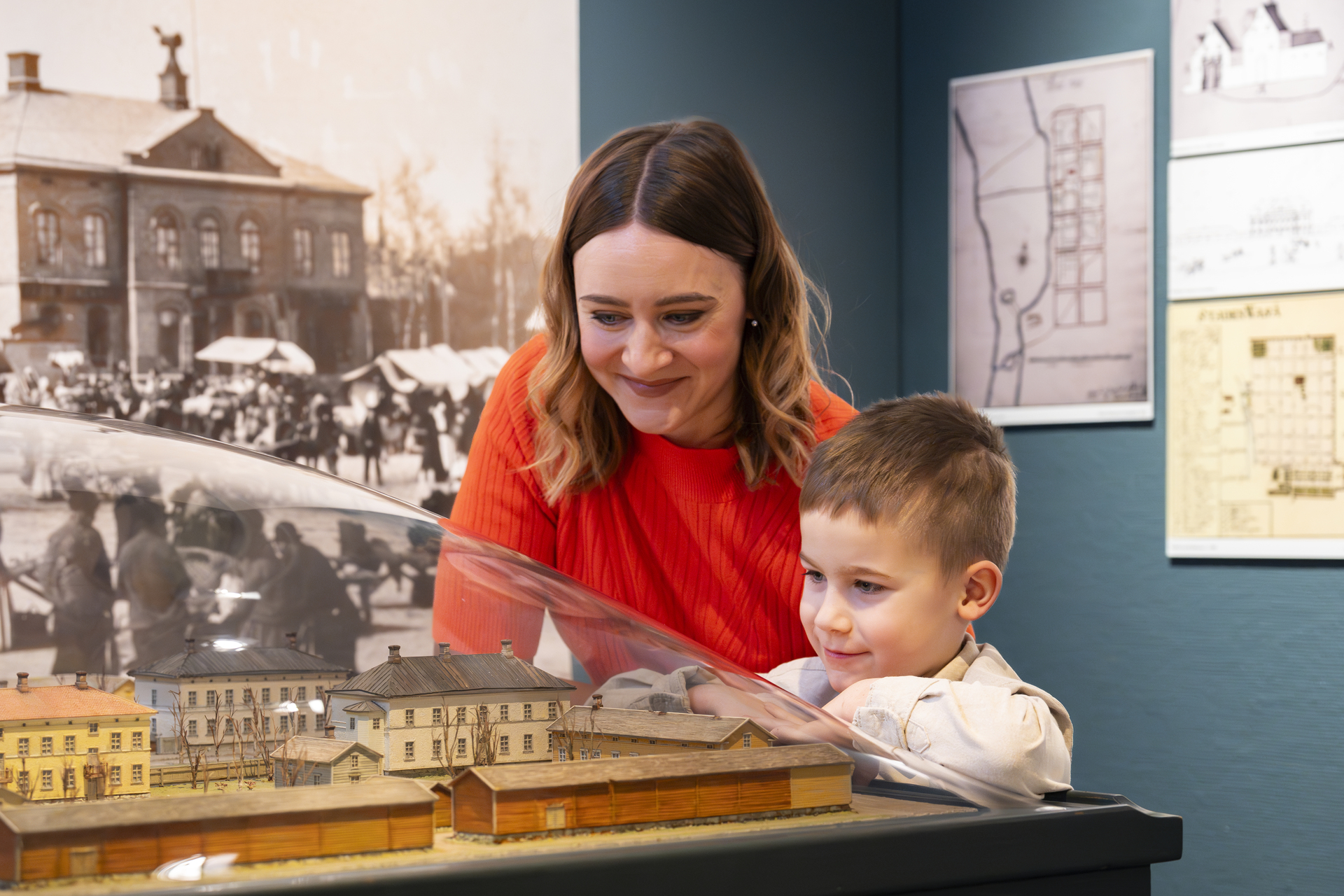
We want to offer everyone a pleasant and safe museum experience. Common rules help protect cultural heritage and ensure an enjoyable visit for all.
The museum is a shared space for all visitors
Please be considerate of other visitors, act safely and respect the museum environment.
- Avoid behaviour that may disturb others or endanger safety. For example, running and climbing are not allowed.
- Guardians and other accompanying adults are responsible for the children in their care during the museum visit.
- Follow the signs and staff instructions. This ensures a safe and pleasant visit for everyone.
- Please help us take care of the museum’s premises and furnishings.
- Our staff will gladly assist and advise you if needed.
- The museum has recording CCTV surveillance to ensure safety.
Exhibitions and facilities
- Generally, exhibits may not be touched. Any items that can be touched or tried are marked separately.
- We strive to keep the museum spaces as accessible as possible. Please inform the staff if you need assistance.
- Large bags, umbrellas and long objects should be left in the designated storage areas.
- Eating and drinking are not allowed in the exhibition spaces.
- Please use the bins for sorting and disposing of waste.
- Spiked shoes are not permitted indoors to protect the floors.
Pets
- Pets are not allowed in the museum.
- Trained assistance animals, such as guide dogs, are warmly welcome.
Photography
Photography and video recording for personal use are permitted in the museum. Please be considerate of other visitors and the comfort of the exhibition spaces when taking photos. The use of flash is not allowed.
- There may be other restrictions related to photography, for example regarding tripods, recording guided tours and drone filming.
- You need permission to photograph staff and other visitors.
- For larger-scale or commercial photography, please contact the museum staff for more information.
Groups and guided tours
Groups are warmly welcome at our museums. Advance registration helps us prepare for the visit and provide the best possible experience.
- Guided group tours must be booked in advance.
- We also ask self-guided groups, such as school classes, to register in advance.
- During guided tours, please follow the guide’s instructions to ensure a smooth and pleasant visit for all participants.
- Teachers and supervisors of school classes are responsible for their group throughout the visit.
The accordion block is useful when a page’s content is extensive and can be grouped into clear sections. An accordion supports the page’s scannability and helps the user find relevant information.
However, do not hide all content behind an accordion – the most important information should be visible directly without extra clicks. Avoid using an accordion if:
the content is short and fits well in view without hiding
important information could be missed because of hiding
You can also add other content blocks inside the accordion, such as lists, images or a timeline.
Frequently Asked Questions (FAQ) – each question as its own expandable item
Step-by-step or topic-based instructions – e.g. procedures for different situations
Service-specific information – when several services are presented on the same page with the same structure
Extensive listings – such as service points, contact details or price lists
Content that interests different user groups in different ways – the user can open only the sections that are relevant to them
On this site
If the page contains subpages, you can add them to the page using the Content links block template. Do not change the block’s title unless there is a justified reason.
Tempor quis sit in consectetur Lorem pariatur adipisicing adipisicing. Labore aliqua cillum officia est velit ad mollit. Dolor eu ullamco laborum est nisi mollit.
Tempor quis sit in consectetur Lorem pariatur adipisicing adipisicing. Labore aliqua cillum officia est velit ad mollit. Dolor eu ullamco laborum est nisi mollit.