
The Ostrobothnian Museum
Explore the history of the Vaasa region as well as the nature of the Kvarken and its World Heritage in our urban-historical and natural science permanent exhibitions.

Discover and visit
Exhibitions and events
Discover the current exhibition and event offerings at the Vaasa museums!
Visit the museum
Here you will find all the necessary information before your visit to the museum.
Museum contact information
On this page you will find general contact information for the Vaasa museums as well as staff contact details.
About the museum
Learn about The Ostrobothnian Museum, its history and notable figures.
The Ostrobothnian Museum is located in Marian Park, about a 15-minute walk from Vaasa Market Square. The museum was founded in 1895. The museum offers experiences, information and inspiration in the fields of cultural history, local history, natural science and art.
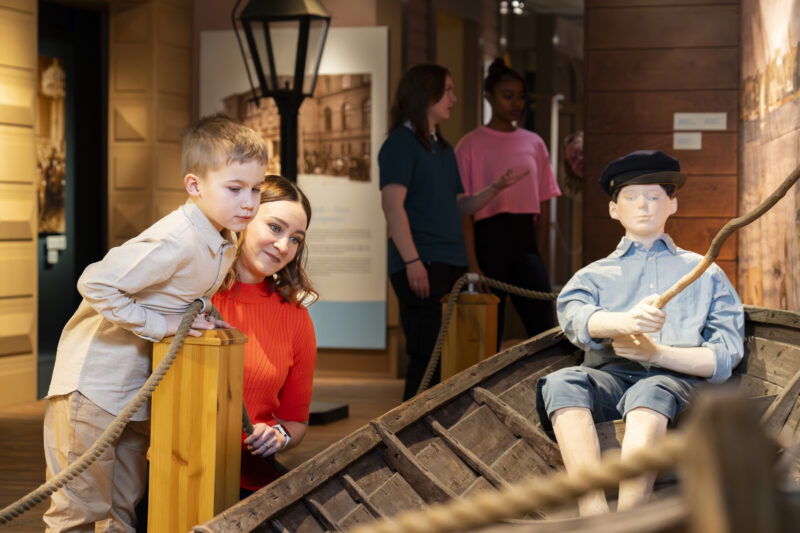
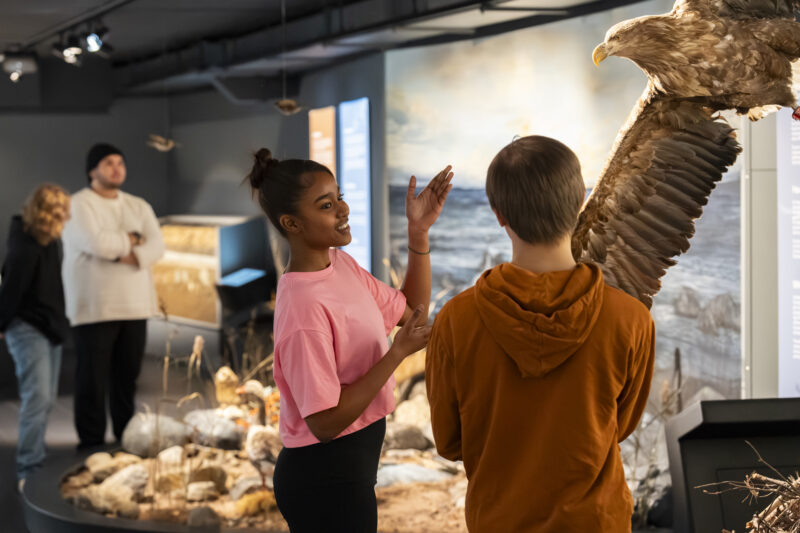
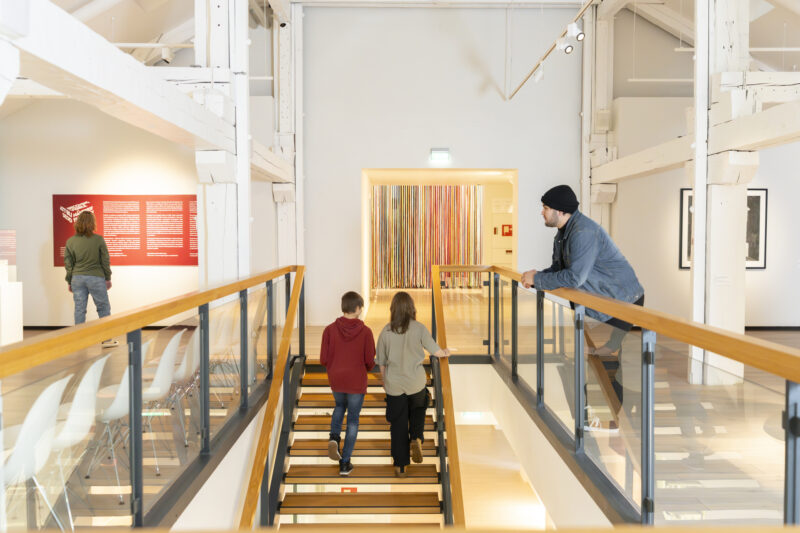
There are three long-term exhibitions based on the collections. The Terranova exhibition presents the nature of the Kvarken and the World Heritage. Vaasa 400 tells the history of the City of Vaasa, from the city’s founding up to the 1920s. The exhibition also displays the rich folk art and archipelago culture of the Ostrobothnia region. In the Hedman floor there is Finnish and foreign silver, ceramics, antique objects and visual art. In addition, the museum organises 3–5 temporary exhibitions annually.
The Ostrobothnian Museum’s key partners include the Ostrobothnian Historical Museum Association ry, Hedmanin Säätiö, Vaasa Art Association, Ostrobothnia Australis rf and the Veljekset Gröndahl Foundation.
The first museums in Finland were founded at the end of the 19th century, inspired by the national awakening. In Vaasa the initiative was taken by the Ostrobothnian Historical Museum Association in 1895.
The association’s aim was to collect objects and written material from Ostrobothnia that would benefit scientific research and make it possible to open a permanent museum exhibition. The association collected antiquities, church items, books, writings, coins, medals, costumes, furniture, household items and war-related objects. The first temporary museum exhibition was opened in 1896.
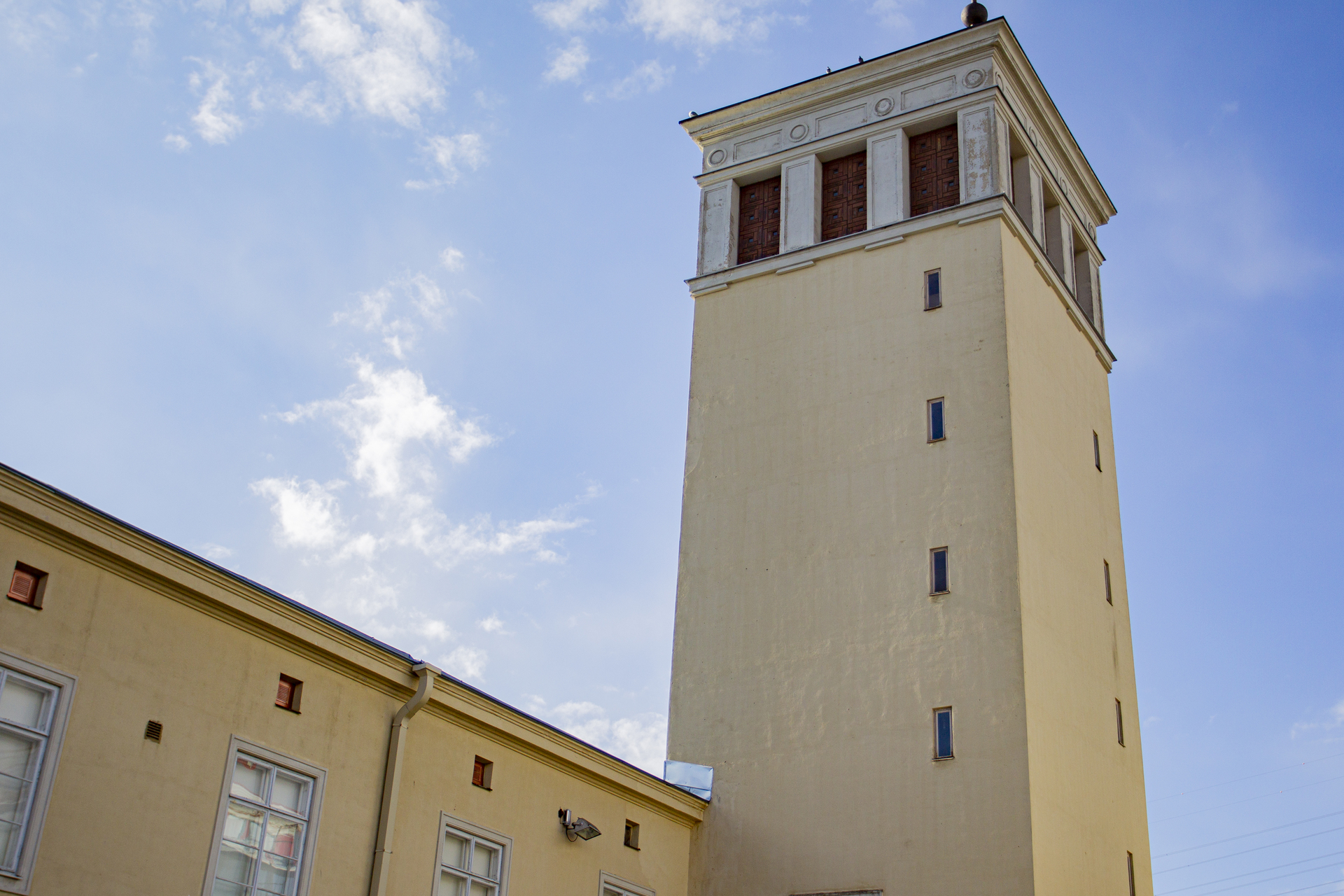
The Ostrobothnian Museum had temporary exhibition spaces in various parts of the city before the new museum was completed in Marian Park. The museum building, designed by architect Eino Forsman, was inaugurated in June 1930.
Professor Karl Hedman (1864–1931) is closely associated with museum activity in Vaasa. Hedman was an enthusiastic collector of art and antiques. He shaped the direction of the Ostrobothnian Museum’s activities up to the 1930s. Karl and Elin Hedman were given use of the top floor of the museum as their home and as a place to house their collection. For a short time Karl Hedman also had a medical practice on the same floor.
After Karl Hedman’s death, his wife Elin Hedman served as the museum’s intendant and was later followed by Arne Appelgren, who had become involved in the museum’s activities already in the 1930s. In 1969 a new exhibition wing, designed by architect Erik Kråström, was completed. The museum was named a provincial museum in 1981 and a regional art museum in 1983. Today The Ostrobothnian Museum operates as a museum with regional responsibility.
The museum association ran museum operations until 1990, when the City of Vaasa took responsibility for the museum’s collections, operations and staff.
Karl Gustaf Wilhelm Hedman (1864–1931) was a physician born in Vaasa and a collector of art and antiques. Hedman studied history and medicine at the Imperial Alexander University in Helsinki. He qualified as a physician in 1895 and returned to his home city afterwards. Karl Hedman married Elin (née Hasselblatt) (1877–1943) in 1897. Hedman took part in numerous positions of trust and served actively as chair of the Ostrobothnian Historical Museum Association. He was a member of, among others, the Finnish Art Society, the Svenska litteratursällskapet, the Finnish Antiquarian Society, the Vaasa Art Association, the Genealogical Society and the Svensk-österbottniska samfundet.
Hedman began collecting antiques in 1892. He acquired art while travelling in the province and abroad, but perhaps the most significant factor for the collection was his interaction with Helsinki art dealer Gösta Stenman.
Karl and Elin Hedman donated their antiques and art collection to the Hedman Foundation in 1931. The Hedman Foundation’s collections were donated to the City of Vaasa in 1997.
The Ostrobothnian Museum collects tangible and intangible cultural heritage related to the Ostrobothnia region and the City of Vaasa. The range of material conveying cultural heritage is wide and includes both everyday items and famous works of art.
-
Ostrobothnian Museum

Phone
040 865 1933Opasvaraukset (museon aukioloaikoina): 06 325 3800

Email

Address
Pohjanmaan museo, Museokatu 3, 65100 Vaasa
- Esteetön sisäänkäynti
- Pääsy näyttelykerroksiin hissillä
- Näyttelyihin esteetön pääsy, lukuun ottamatta rahakammiota
- Hopeahuoneen ovi on 74cm leveä
- Inva-wc
- Lastenhoitohuone
- Lainattava pyörätuoli
- Lainattavat lastenrattaat